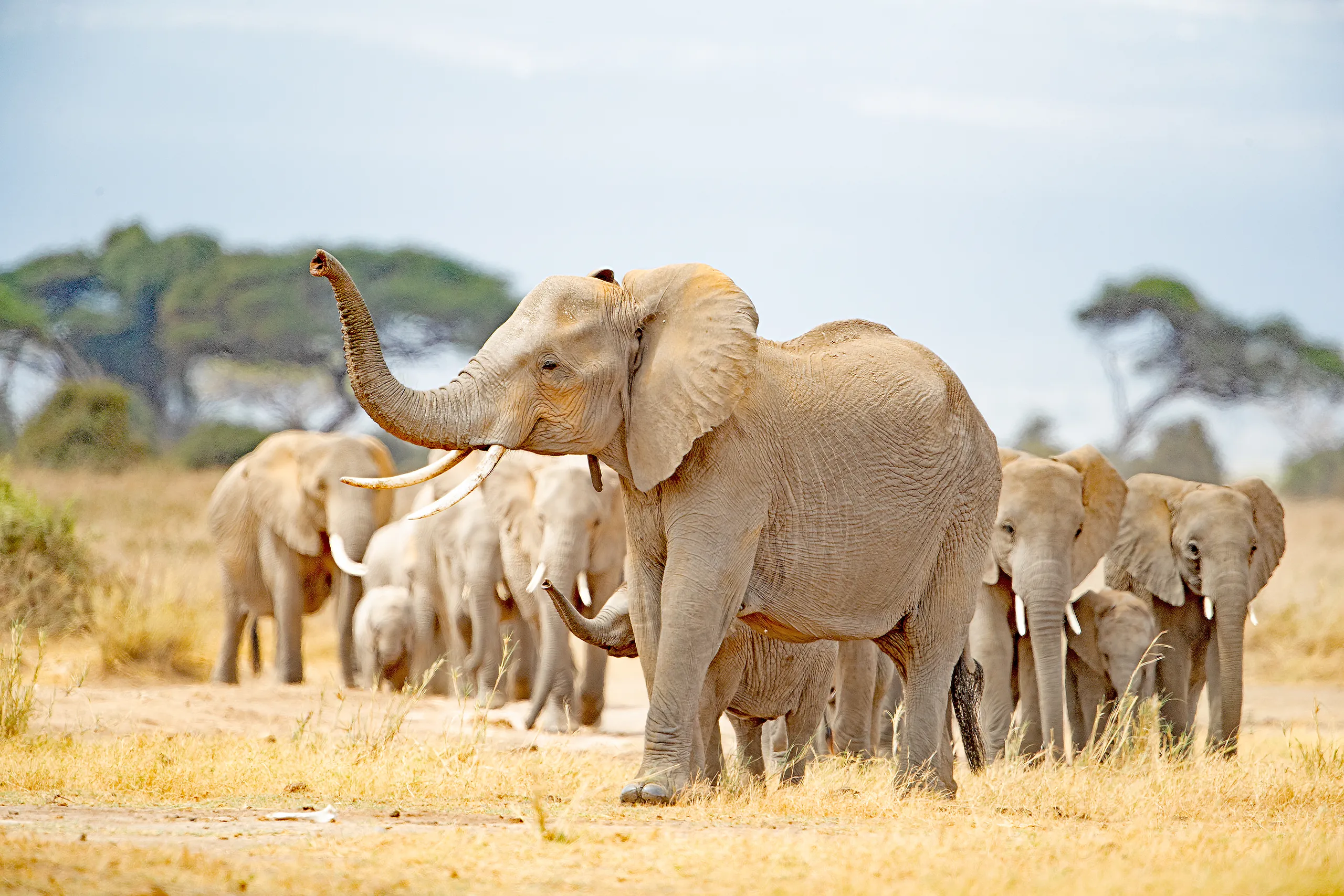
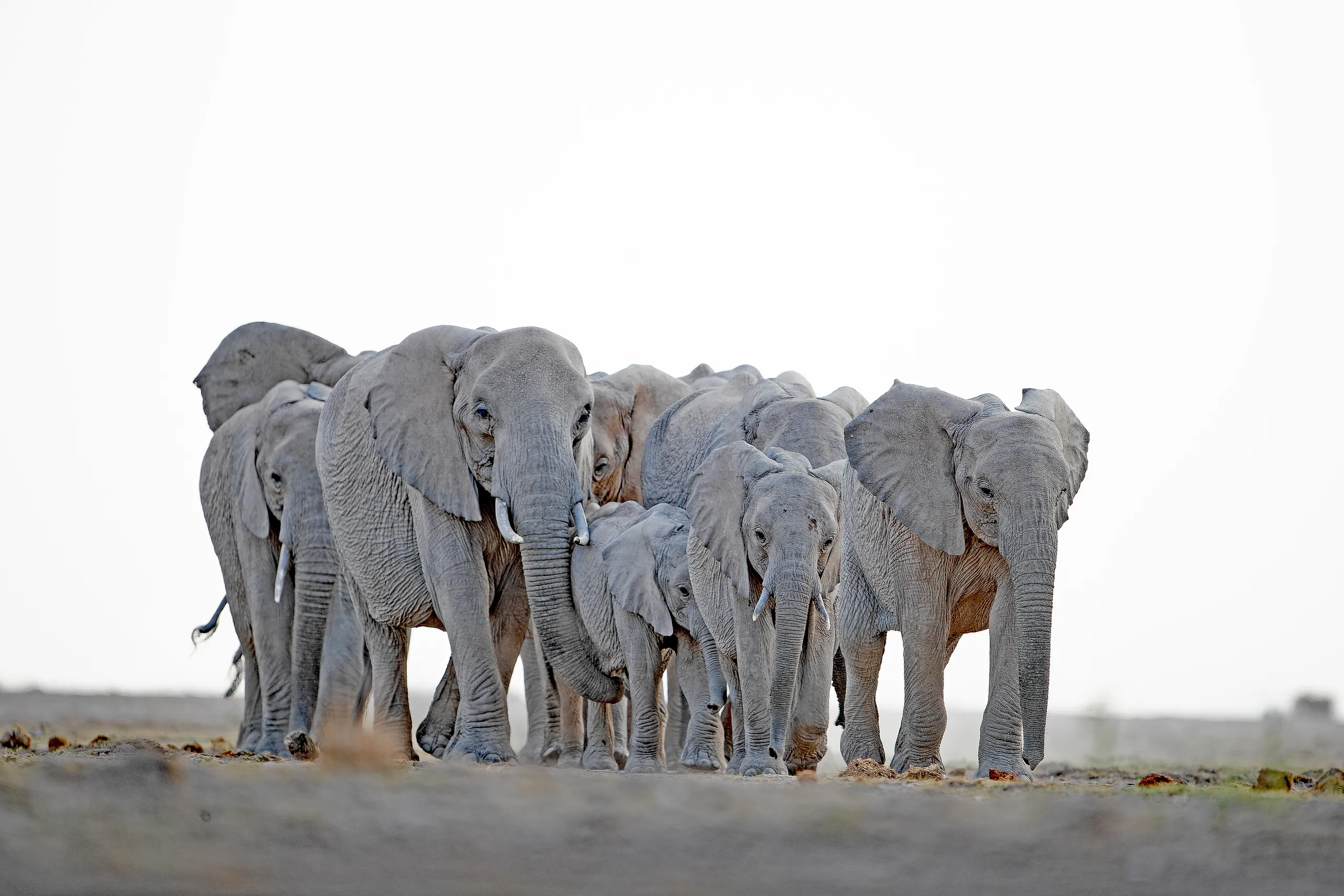
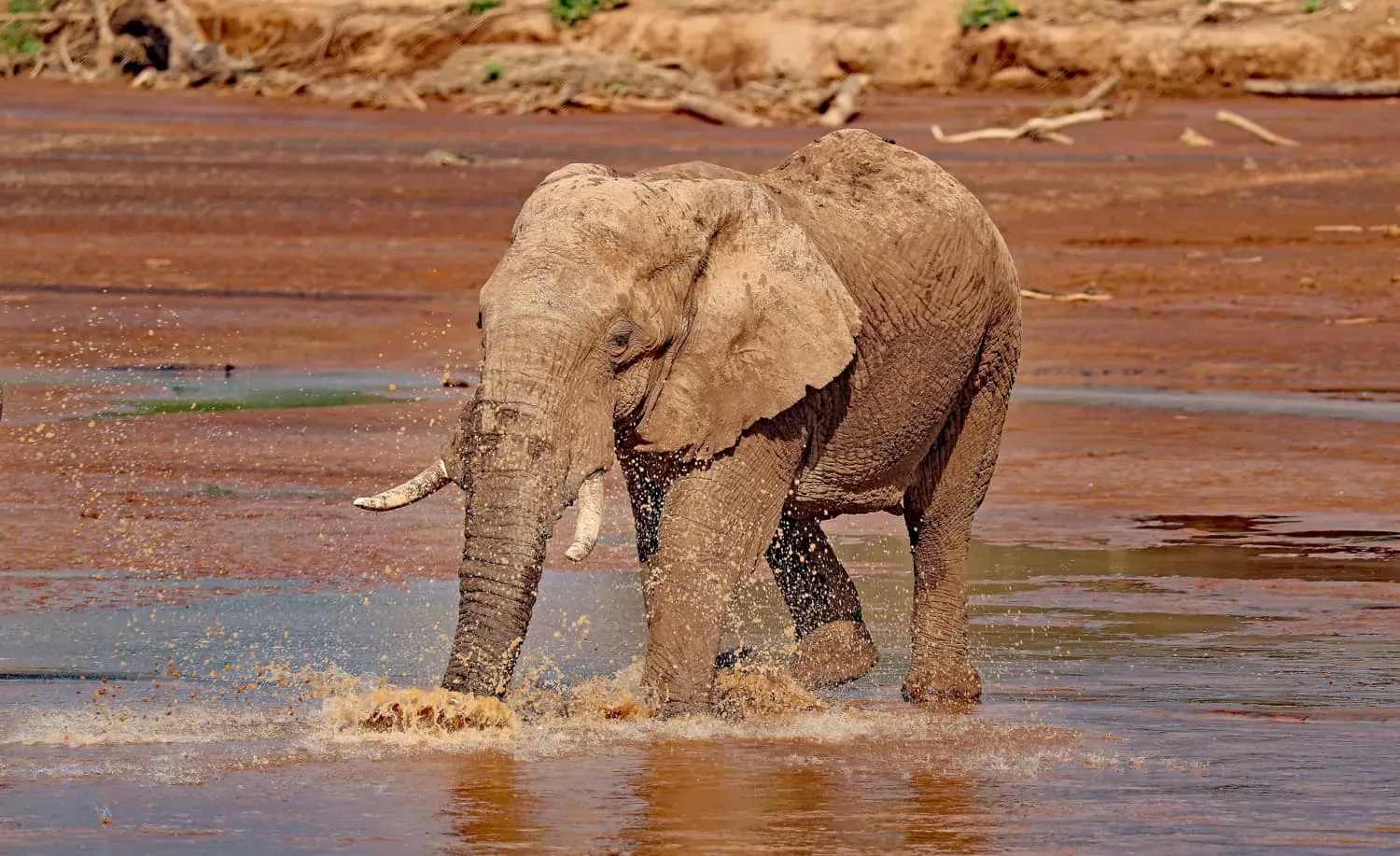
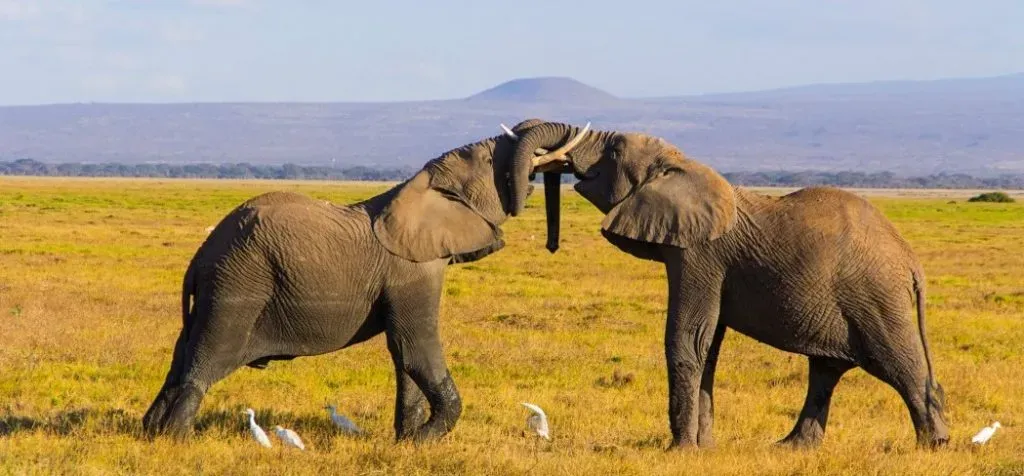
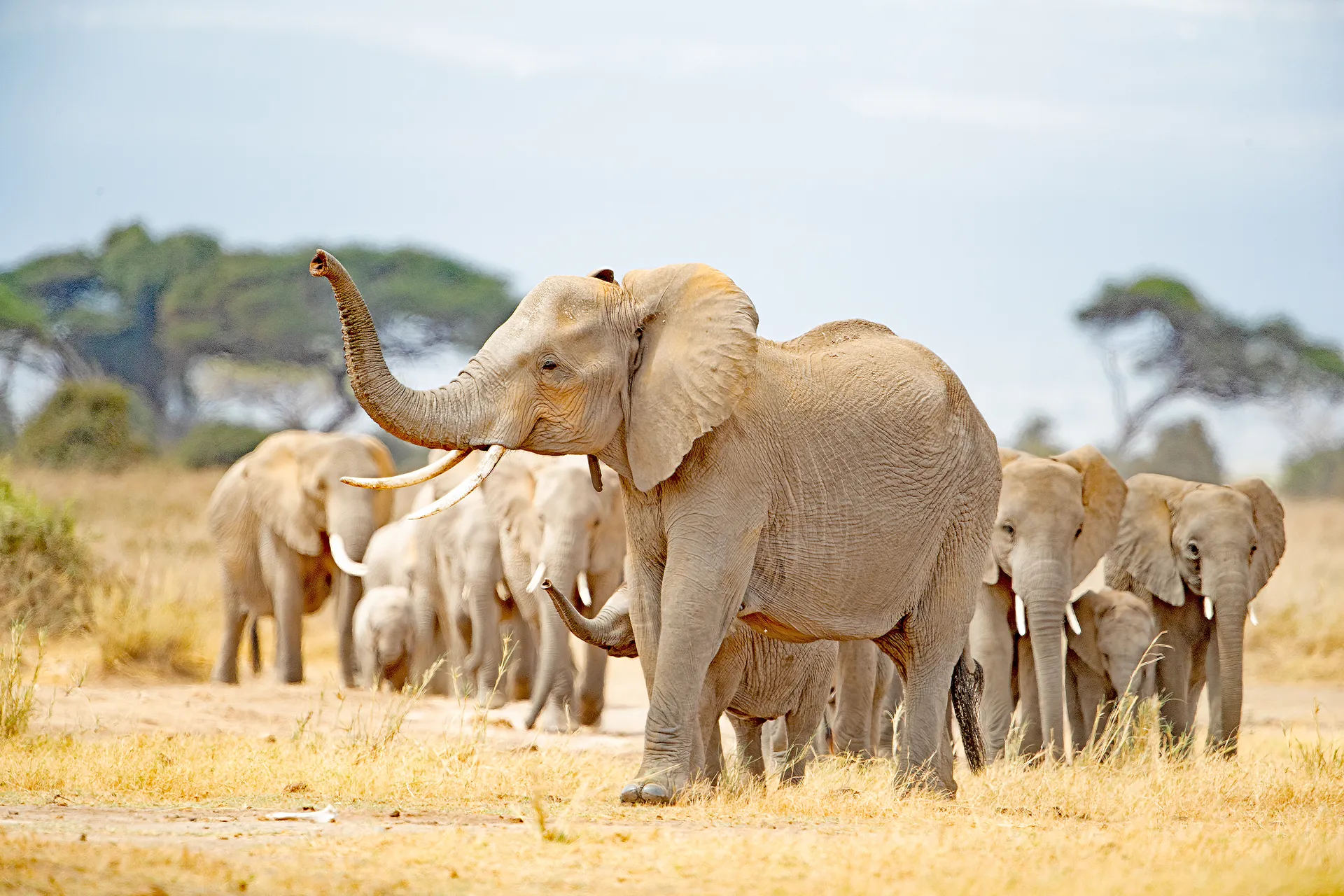
African Savanna Elephant
Loxodonta africana
- IUCN: Endangered (assessment accepted 2021)
- Habitat: savannas, open woodlands, arid zones
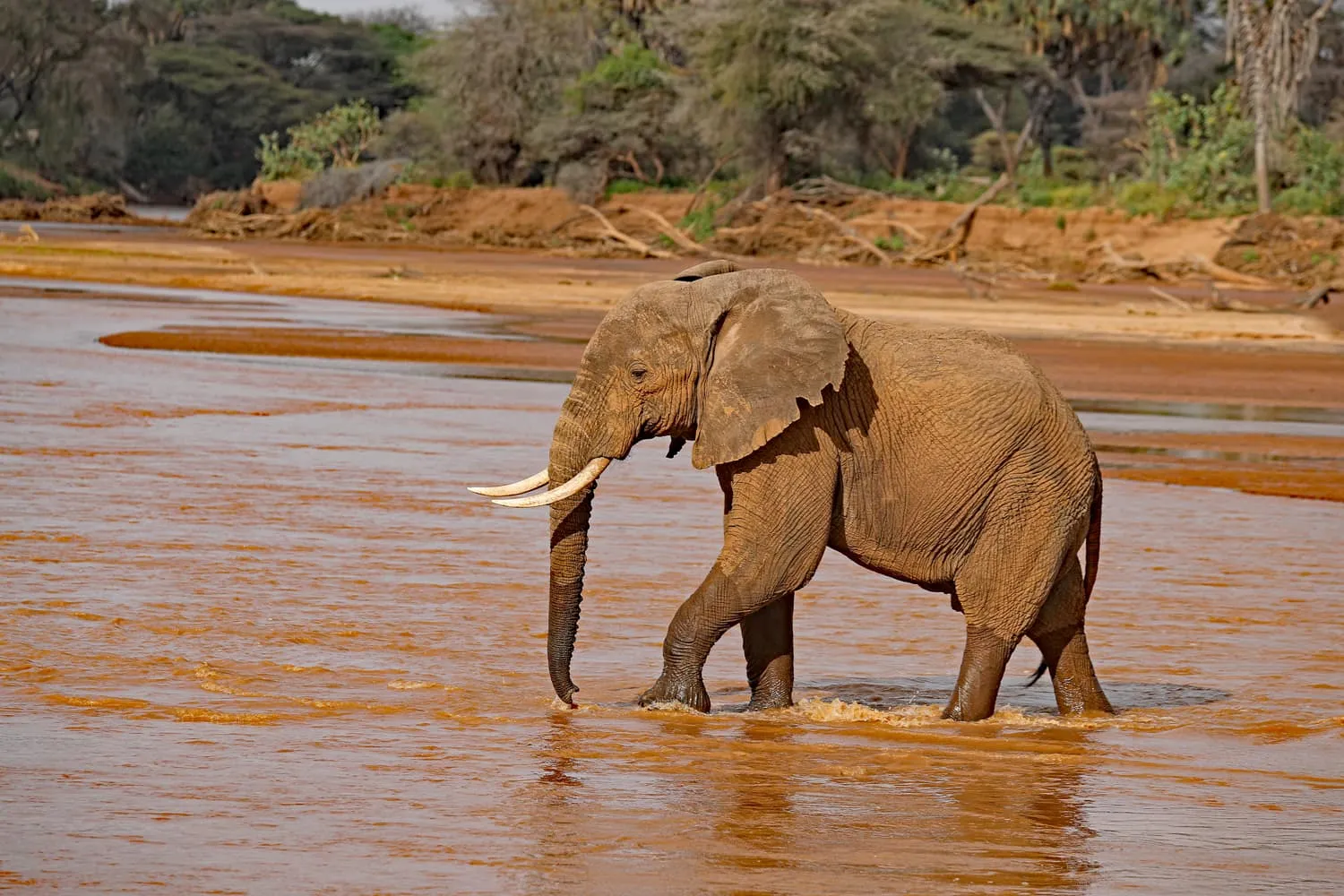
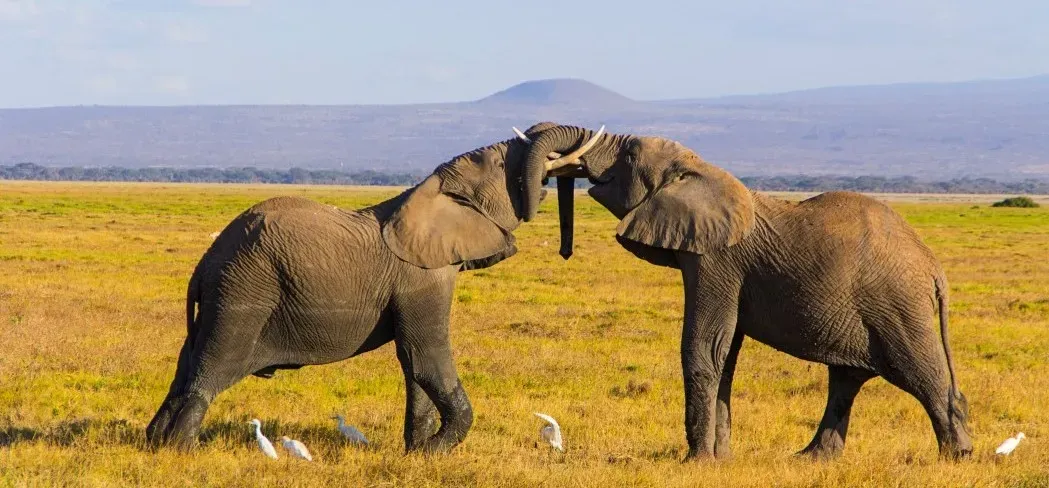
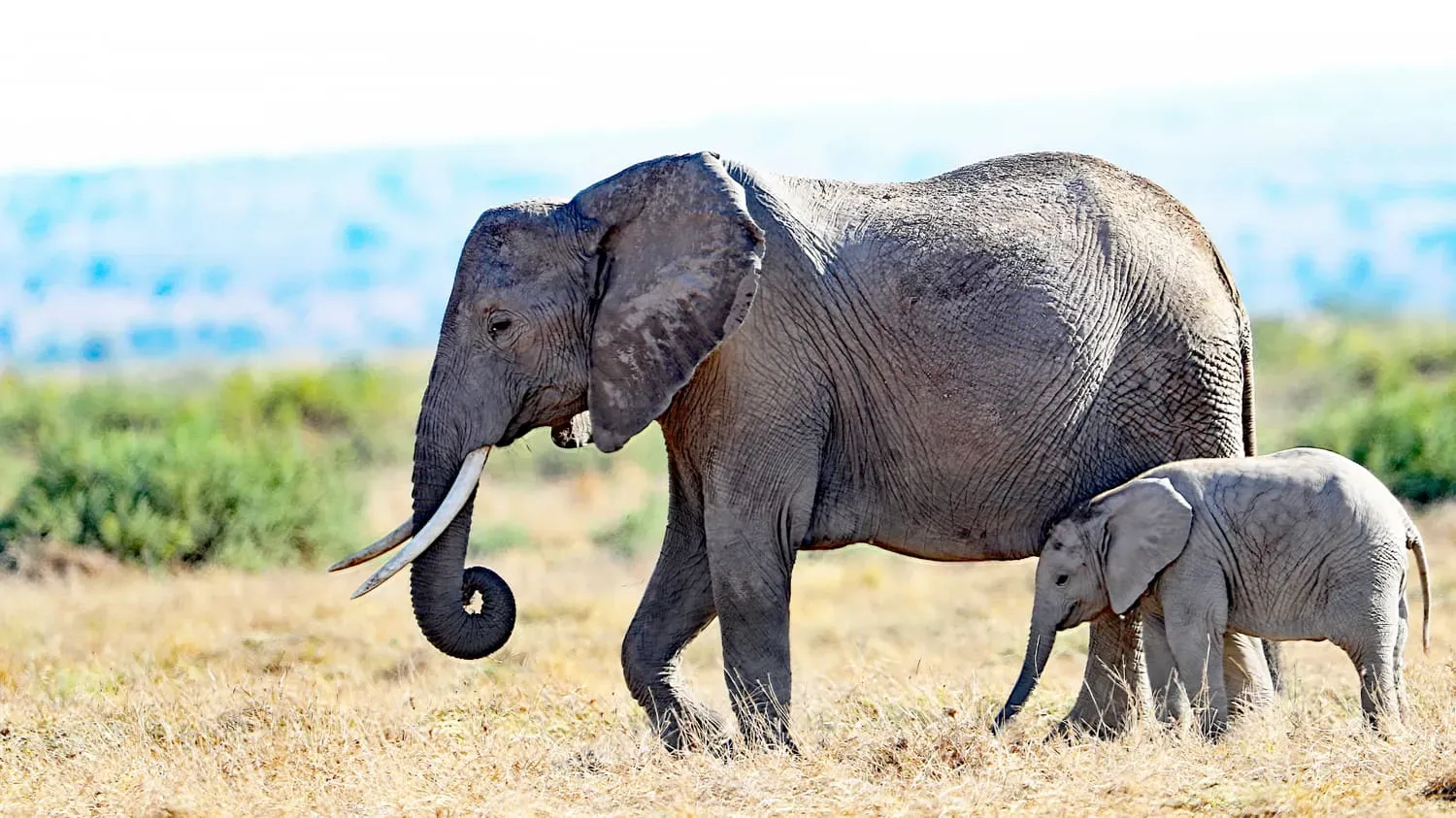
- Field cues: larger body, concave “saddle” back, outward-curving tusks, massive ears
Elephant safari guide. Updated February 13, 2026
Compare the strongest elephant safari destinations, learn which routes fit your trip style, and use the guide to narrow down the right itinerary.
The core story in 2026: African elephants are not one population. Treating Loxodonta cyclotis (forest) and Loxodonta africana (savanna) separately reveals a high-risk forest elephant stronghold in Central Africa, contrasted with relative numerical stability in parts of Southern Africa.
Primary sources: IUCN (forest elephants), IFAW (KAZA survey), IUCN Red List (Bornean).
Estimates vary by method, habitat, and survey year. Values here are presented as a practical dashboard for the 2025–2026 cycle.
Safari planning
If this guide is pushing you from curiosity into trip planning, start with the itineraries that make elephant sightings easiest to build around.
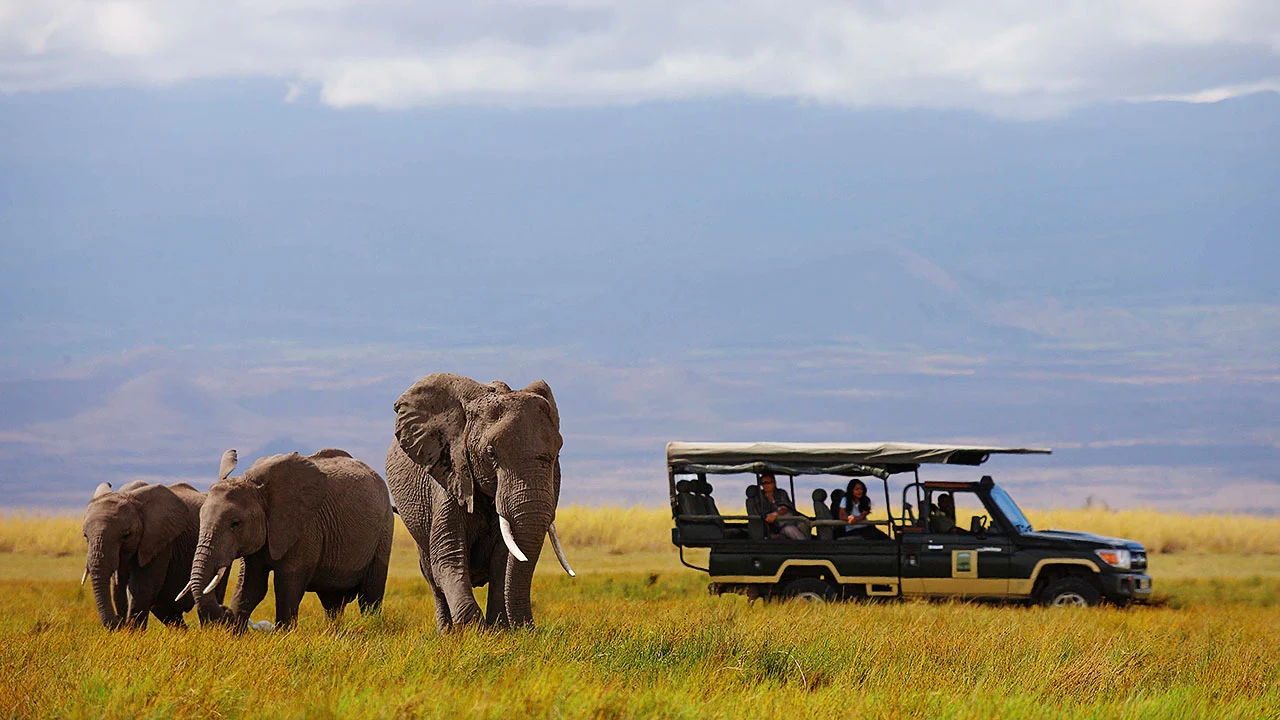
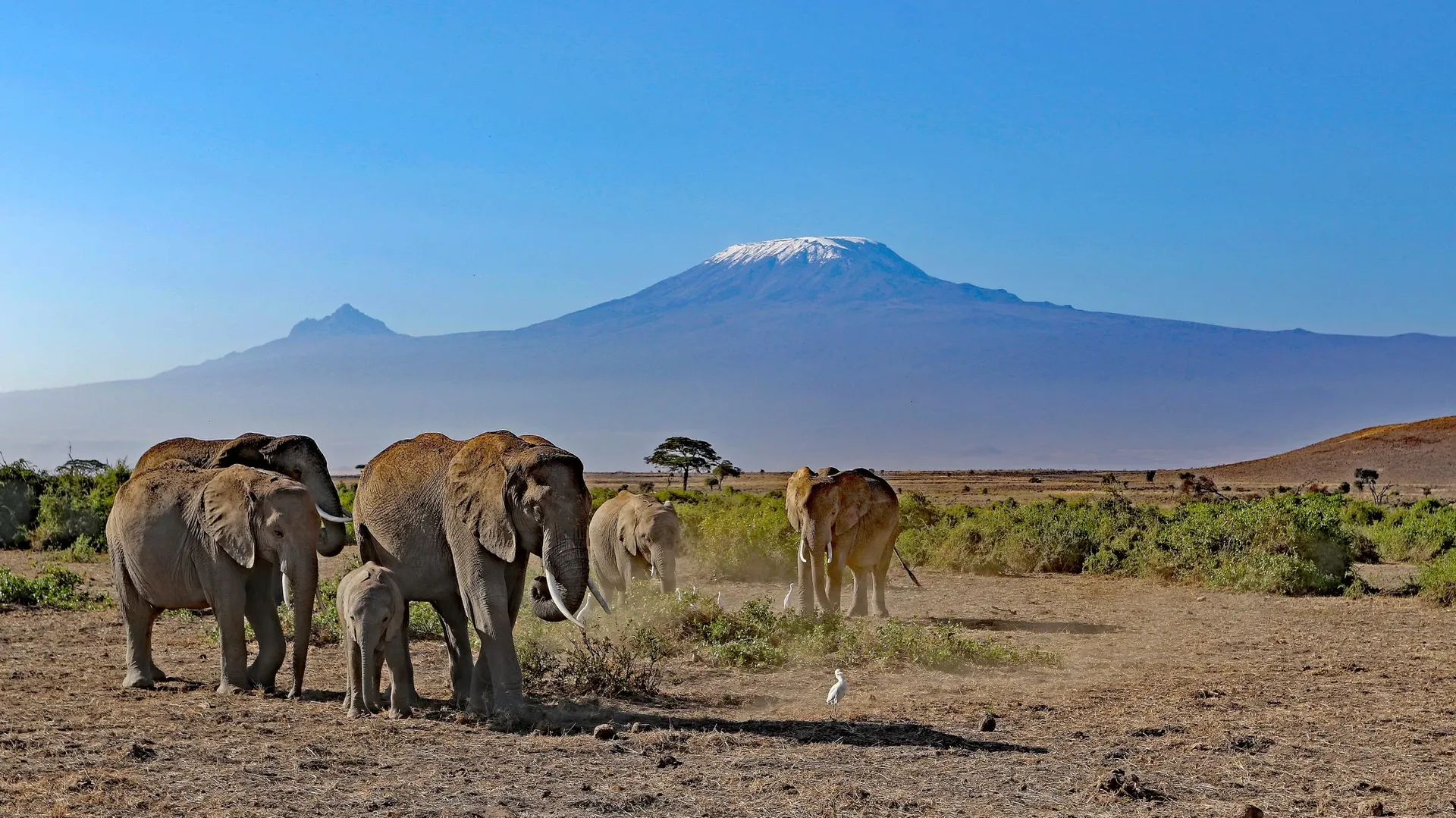
The clearest safari match when your goal is big elephant herds, open plains, and strong photo moments.
See elephant safari Longer routeA broader Kenya circuit with strong elephant time across Amboseli, Samburu, and other wildlife-rich landscapes.
Open itinerary Custom planningGet a custom route built around forest, savanna, or conservation-focused elephant sightings.
Request a safariConservation strategy changes when the unit of management changes. The accepted taxonomic separation of African forest and savanna elephants clarifies risk: a numerically larger savanna species with major strongholds, and a forest species concentrated in a shrinking core.
Loxodonta africana
Loxodonta cyclotis
Elephas maximus
Elephant threats are not uniform: forest poaching looks different from savanna poaching, and Asia’s crisis is dominated by habitat fragmentation and conflict along agricultural edges.
Solutions increasingly combine tech, coexistence, and connectivity. The highest ROI often comes from reducing conflict, not only from enforcement.
Key reading: PNAS paper, IMF explainer.
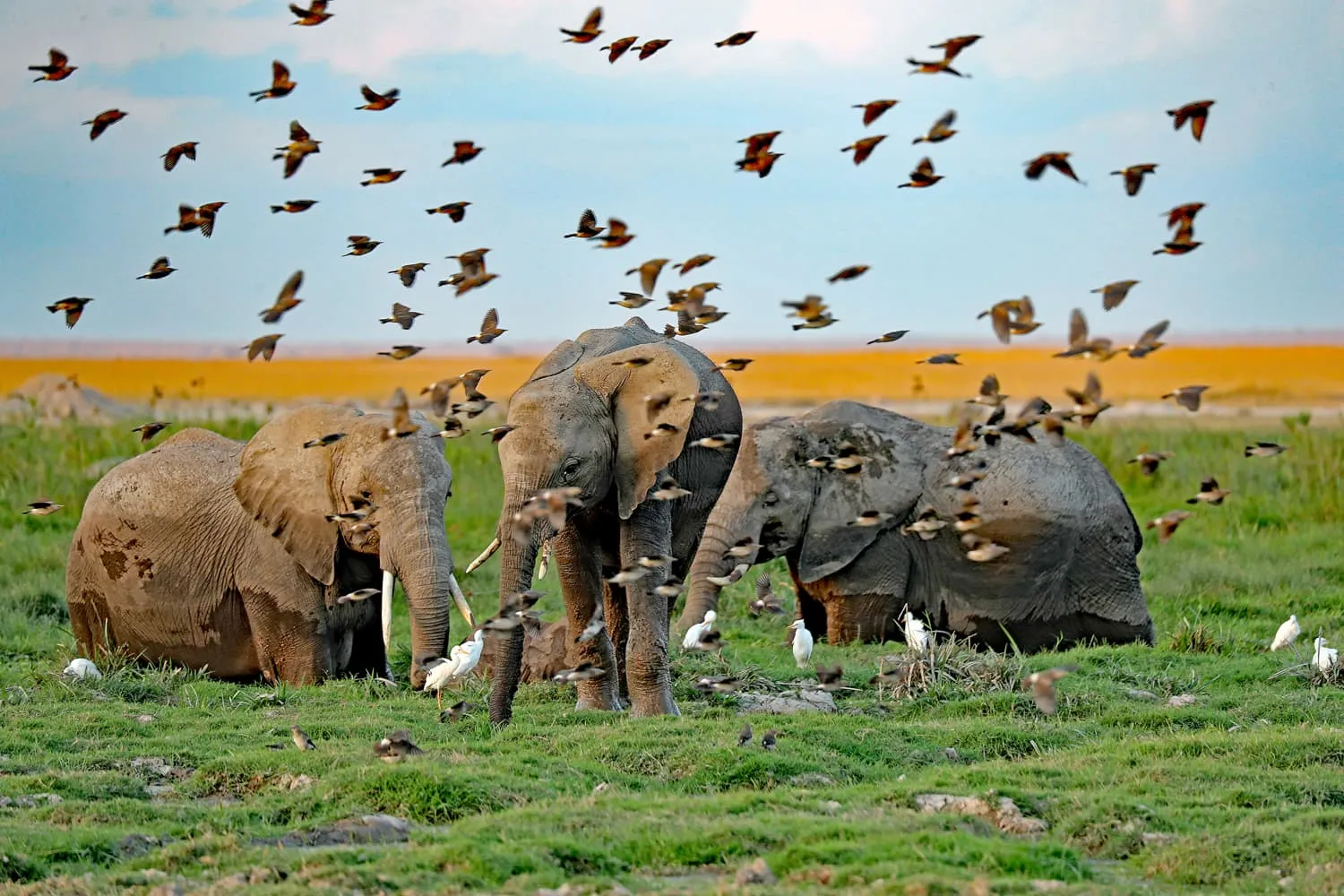
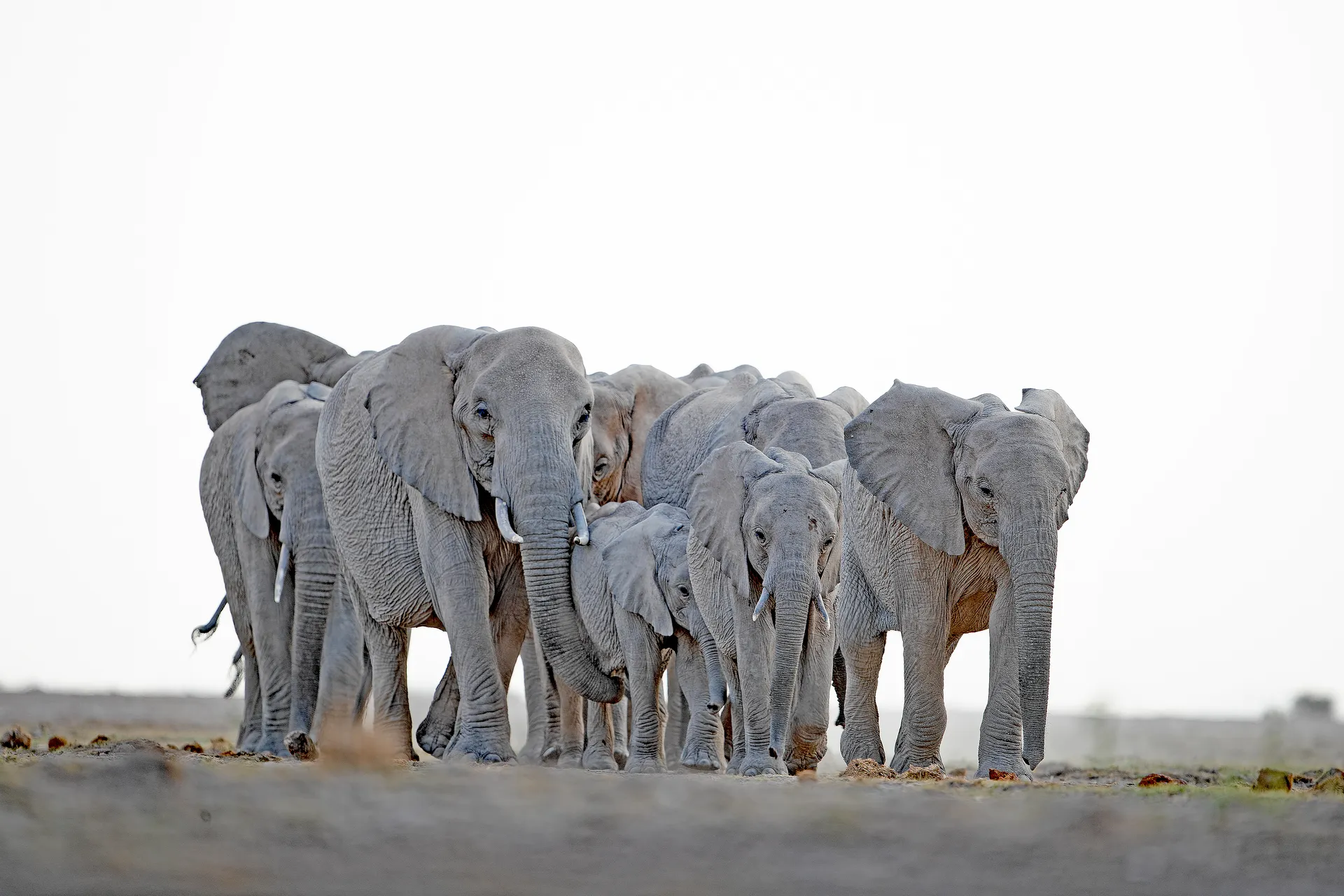
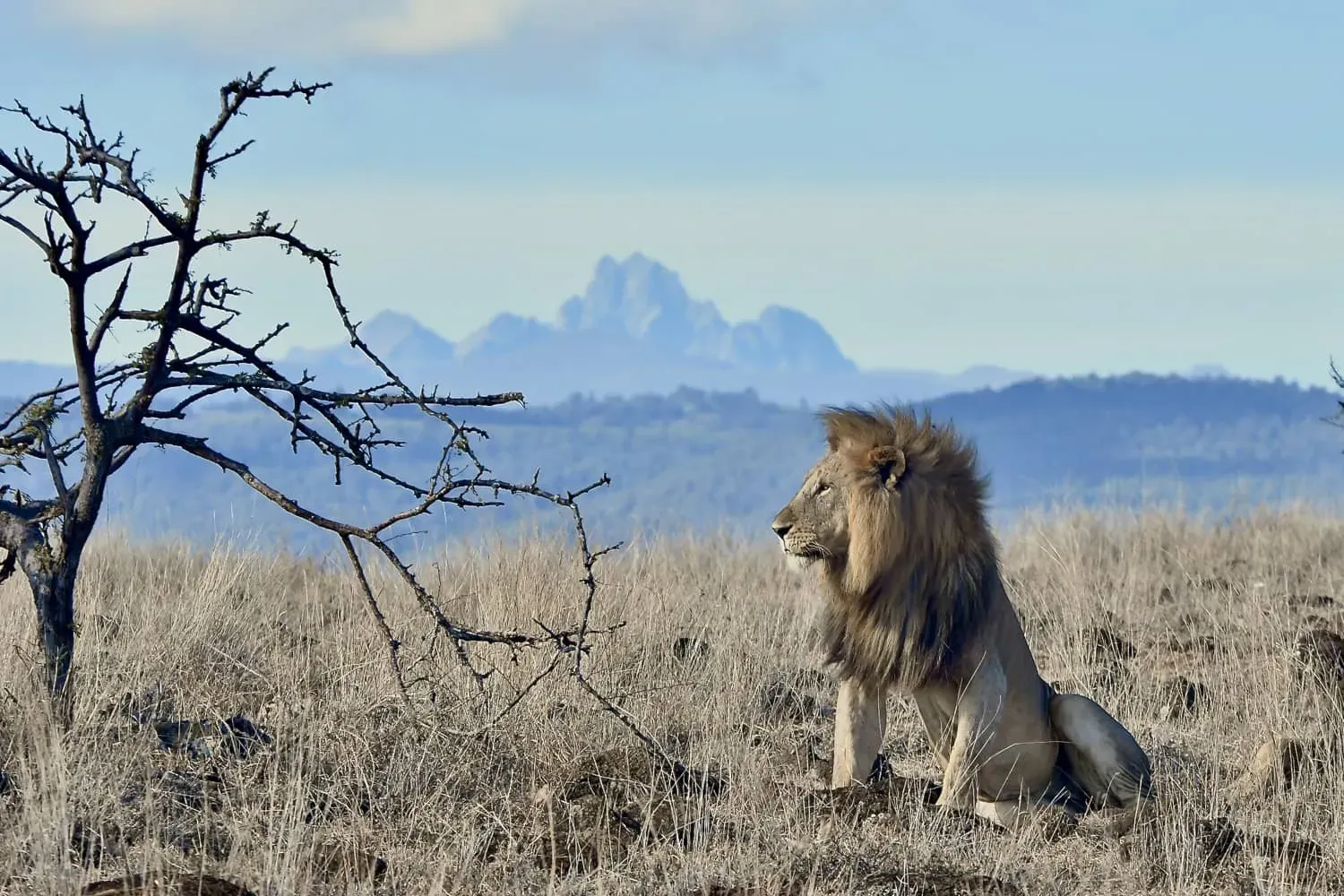
A growing library of elephant photos. Click any image to zoom.
17 photos · Tip: click any image to zoom.
A short source list for the key figures and claims on this page. Full citation details are available below.